

Call for Papers – Ancient Magica in the Early Modern Period (16th–18th centuries)
Ancient Magica in the Early Modern Period (16th–18th centuries)
Visualizing Antiquity. On the Episteme of Early Modern Drawings and Prints VI
Colloquium on July 2, 2027, in Berlin
What did “magic” mean to people in the early modern period? Did it encompass the foreign in its broadest sense, the exotic, the cultic, the cosmic, the distant past—perhaps even antiquity itself? How did early modern actors engage with and make sense of these phenomena? What, precisely, did the category of Magica designate? And how were ancient magical artefacts perceived, documented, classified, and incorporated into early modern systems of knowledge?
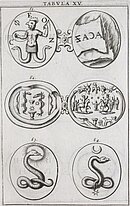
The sixth colloquium in the series “Visualizing Antiquity. On the Episteme of Early Modern Drawings and Prints“ examines the manifold ways in which ancient Magica were perceived, transmitted, and interpreted in the early modern period. At its centre are material and visual sources: artefacts and their representations in drawings and prints, considered within the frameworks of early modern knowledge and interpretation. Contributions may address the religious, cultic, apotropaic, astrological-cosmological, alchemical, medical, ritual, mythological, and symbolic dimensions attributed to these objects.
The range of materials under consideration extends from amulets, curse tablets (defixiones), magical gems (“Abraxas”), inscriptions, seals, and signet rings to magic wands, ritual implements, cult images, statuettes, votive offerings, and ritual masks, as well as reliquaries, pendants, jewellery, Horus stelae, and magical papyri and parchments containing spells. Literary sources and traditions may likewise serve as points of departure. We are also interested in the phenomenon of reconstructed, invented, or otherwise newly constituted forms of magic—including early modern creations of images and signs such as hieroglyphs, magical alphabets, fictitious charaktêres, and Hermetic or occult emblems. In such cases, drawing and printmaking could function not merely as media for reproducing existing objects or signs, but as autonomous sites in which new forms of magical knowledge and imagery were produced.
Particular attention will be paid to the processes of transmission, representation, and appropriation that shaped ancient Magica in drawings, prints, and antiquarian collections. Central to this inquiry is the reciprocal relationship between object and medium: How did antiquarians, scholars, and collectors shape the visibility, interpretation, and classification of magical artefacts through acts of graphic documentation and reproduction? And how, in turn, did the objects themselves inform the ways in which they were drawn, reproduced, classified, and understood?
Another focus concerns the epigraphic and iconographic particularities of Magica—including charaktêres, magical formulae, and inscriptions—and their interpretation and incorporation into early modern learned discourse. The colloquium thus asks how ancient magical artefacts and signs were made visible, rendered intelligible, and transferred into new networks of meaning.